
A website promoting the books of Paul Mc Mahon, with a flavour of the travel undergone as part of the research involved.
Home
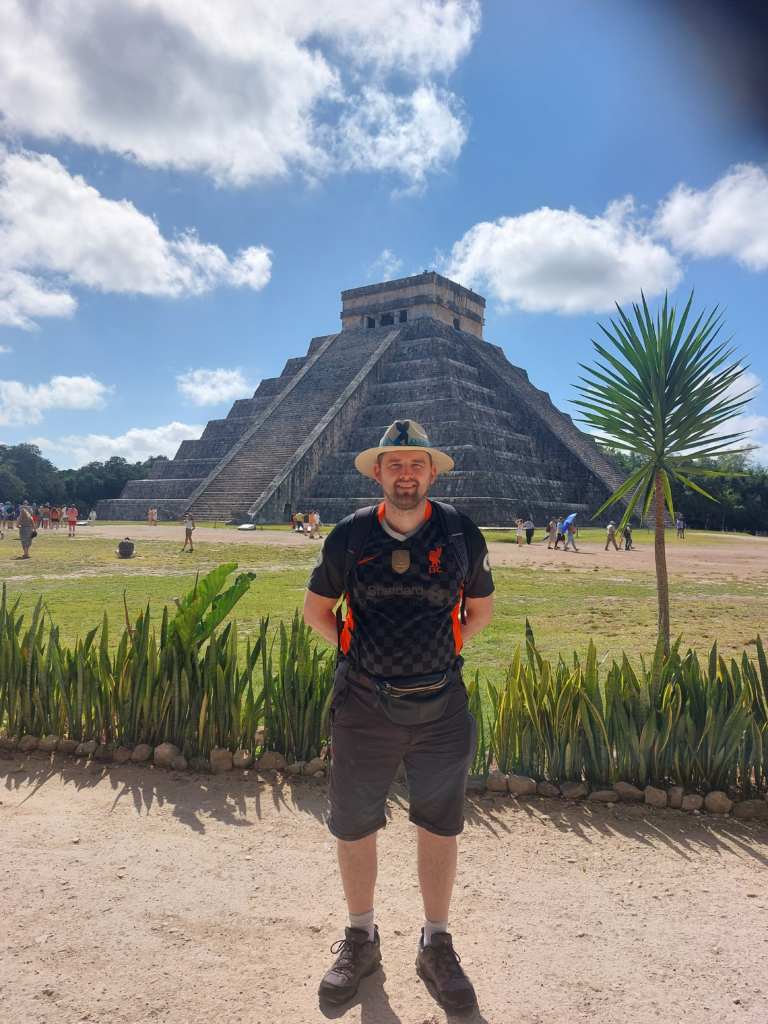
Chichén Itzá
In visiting Mexico, I did a more or less reverse journey to Hernando Cortés and his band of conquistadors on their way to Tenochtitlan (present day Mexico City), finishing up in the Yucatán Peninsula, at the famous Mayan ruins of Chichén Itzá (above). The Mayans’ beliefs and culture fed into the religion and mythology of the Aztecs (or Mexica) and influenced their way of life, the former being part of an older, or earlier, civilisation. I’ve written about these Aztec beliefs and the destruction of their civilisation at the hands of Spanish conquistadors in my second historical fiction book, “Montezuma and Cortés,” an imaginary retelling of the first phase of the conquest of Mexico – click this link to see more about this book and its author on Amazon.co.uk.
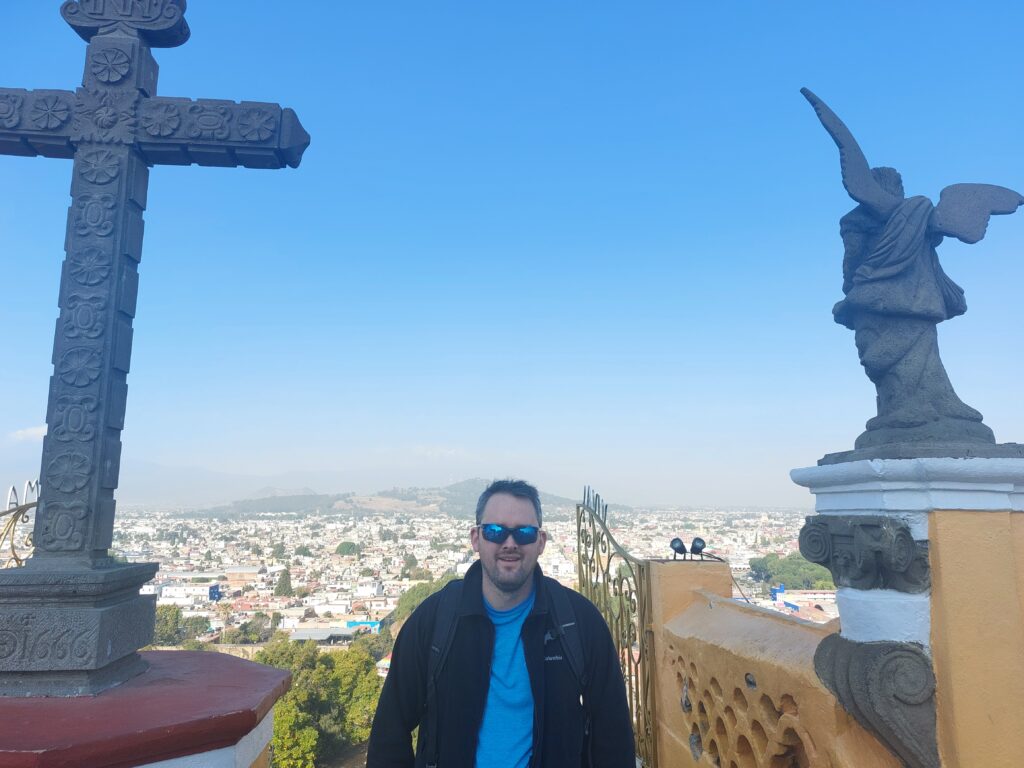
Temple of Cholula
Here I’ve reached the top of the Temple of Cholula – not without some effort, as you might be able to tell from the picture – in modern day Pueblo, in the heart of Mexico. The Spanish built a church where the old Cholulan site lay, a temple which was originally dedicated to the Gods of the indigenous Cholulan tribe, formidable Gods which they shared with their Aztec brothers.
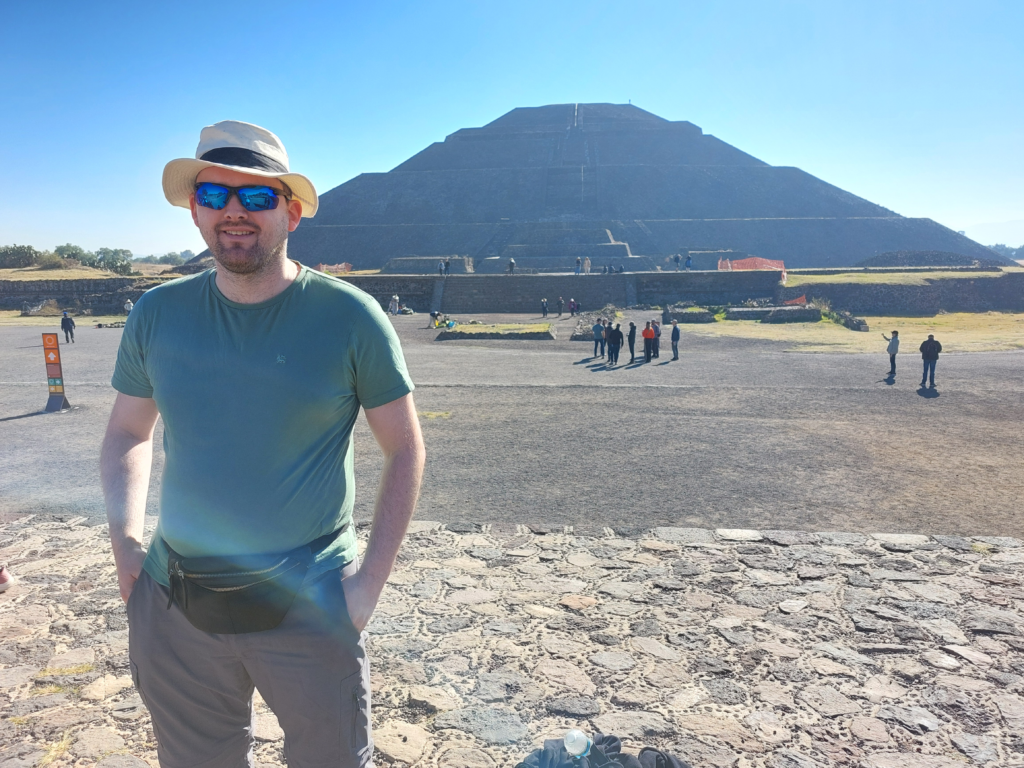
Pyramid of the Sun (Teotihuacán)
Teotihuacán was an ancient site filled with pyramids, which was strangely abandoned several centuries before the Aztecs passed through its eerie, silent ruins. They might have decided to stop there and settle at Teotihuacán, having travelled from what is now the state of Texas in the U.S., but they were compelled to observe a prophecy which told them to settle at a site where an eagle appeared to them, perched on a branch of a cactus tree, clutching a snake in its talons. This became the symbol of the Mexican nation and it can be seen in the center of their present-day flag. In the 14th century, it also became the site of Tenochtitlan, the city of the Aztecs (or Mexica).
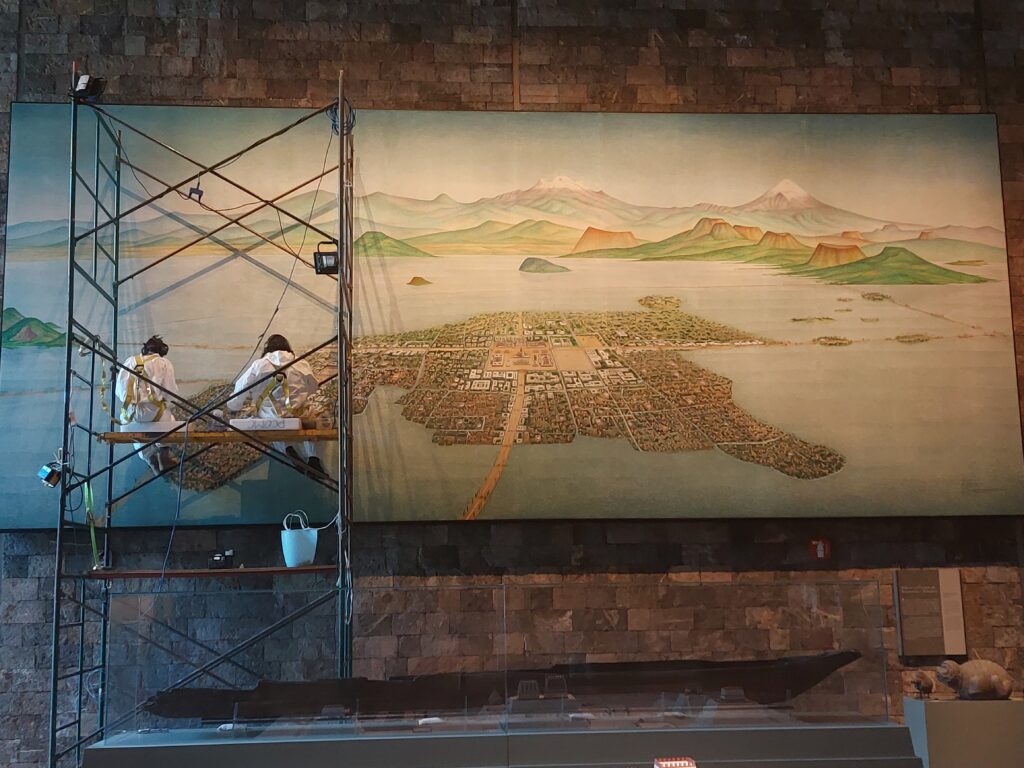
Tenochtitlan in the 16th century
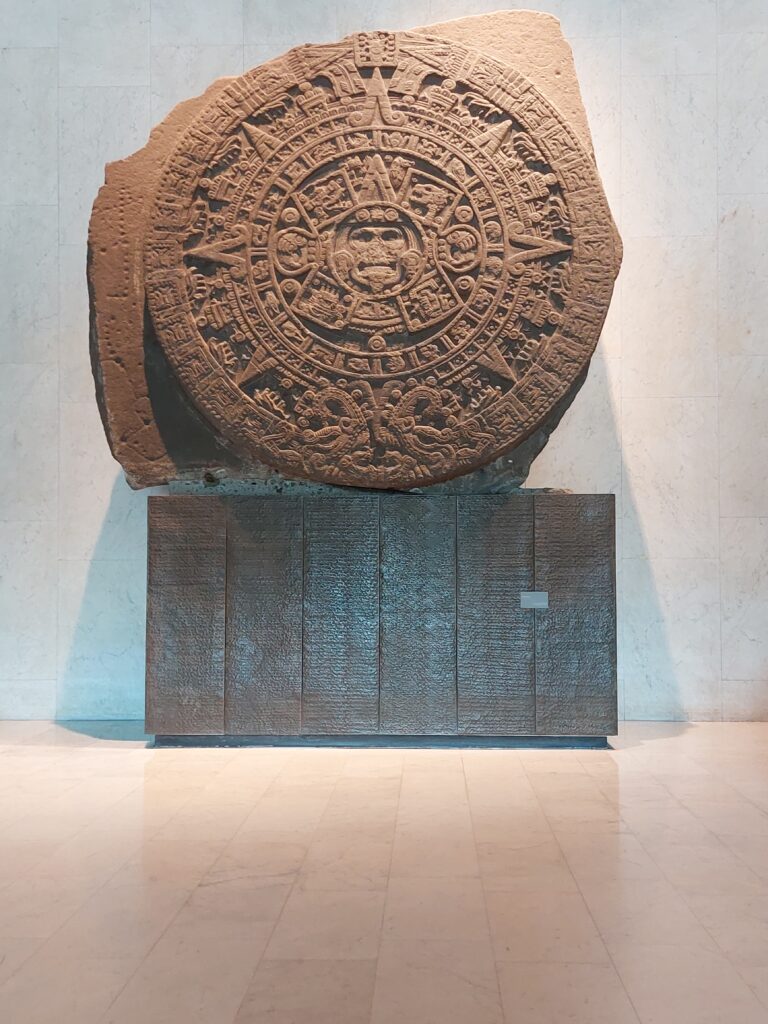
The Sun Stone
The Sun Stone was a large disk, originally thought to have been a calendar, as it has the markings of months or dates upon its surface. But it was actually a platform upon which gladiatoral battles were fought by opposing Aztec warriors, and in which the loser of the fight was subsequently sacrificed to the Gods in order to appease their never-ending thirst for blood.